
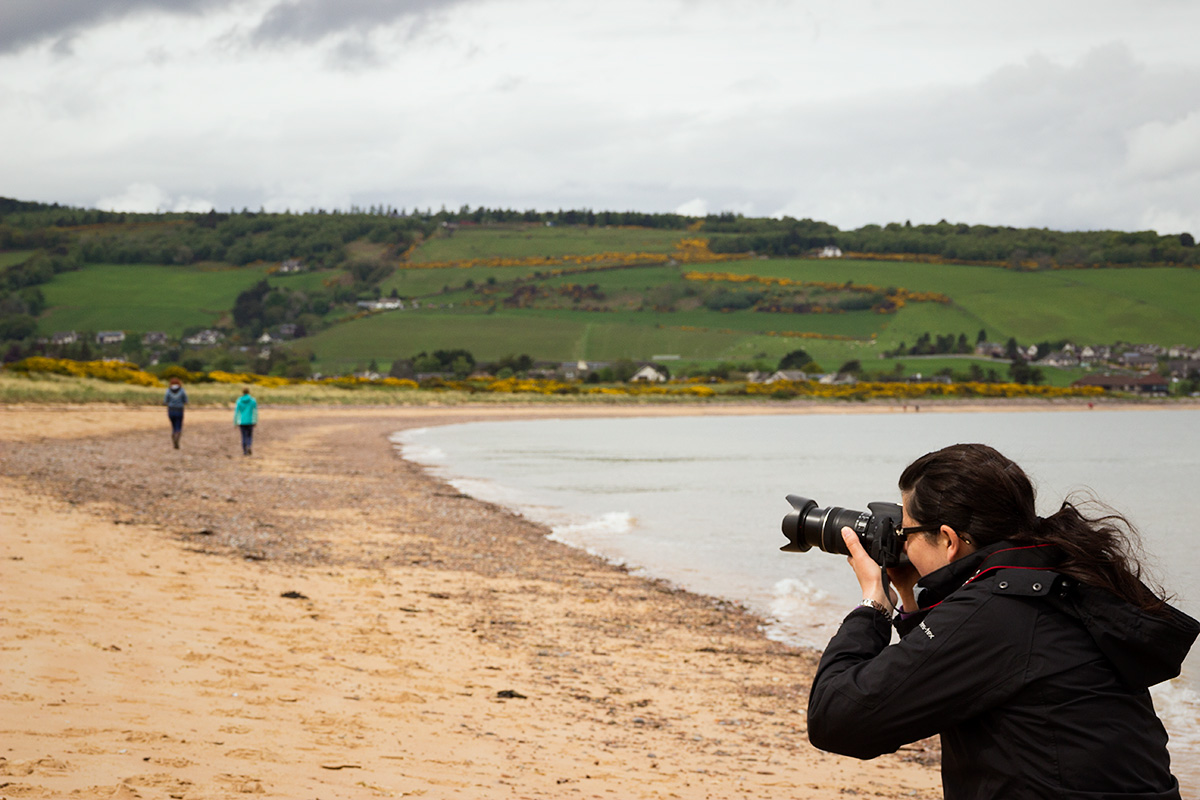
Many people dream of owning a DSLR. I have one and yet, funnily enough, I was not one of those people. In fact, I was the complete opposite. When my husband first talked about getting a DSLR my honest opinion was that I thought it was complete waste of money. These cameras are not cheap! I worried that it would end up lying around unused and gathering dust in the corner of our spare room. I thought the novelty of carrying it around would surely wear off. I told my husband he should try using his Mum’s DSLR camera first to see if he enjoyed it. Instead, he went ahead and bought his fancy new gadget and signed up to a photography course to learn how to use it. This turned out to be a brilliant investment as I was soon hooked on photography too. It is now something I am very passionate about. However, I have also known people who have bought these expensive cameras and either stop using them after a while or never take them out of auto mode. If you are toying with the idea of buying a DSLR, here are 5 things you should consider before purchasing one:
1. Photography is not as easy as you might think
Many people naively think that photography is a very simple hobby. While this can be true (after all, every mobile phone these days has a decent camera), a DSLR does take some investment in learning how to use it to its full potential. Some people do have a natural ability for creating good compositions and taking brilliant photos but you will be limited in what you can achieve if you let the camera make all the decisions for you and remain in full auto mode. You might find yourself wanting to buy a DSLR after seeing amazing images someone has taken with one. You need to realise that it takes time, patience and lots of practise to learn all about the different camera settings and how to properly expose an image in various situations. Not to mention learning all about light. I’m not suggesting you need to shoot in manual mode all of the time but you should become knowledgeable in how to use your camera and familiarise yourself with all the settings. This means you need to be able to invest the time and energy into learning all of this. Else you may be better off spending less money and investing in a good point-and-shoot camera. They are cheaper, easier to use and are more compact. Plus, unless you plan on enlarging your images and creating large prints, higher end models will produce good quality images.
2. DSLRs are expensive
The camera body itself is not cheap but even more expensive are good quality lenses (with the exception of the ‘nifty fifty‘). I would say that investing in good lenses is more important than the camera body itself. For most hobbyists, the kit lens that comes with the camera will suffice. However, the more you get into photography, the more you will probably want to invest in good quality gear. An entry level DSLR will serve you well for many years but good lenses will stay with you even longer (so long as you stick to the same brand of camera). The lenses also have a big impact on the quality of your images and ability to shoot in different situations, such as low light.
3. They are also big and heavy
DSLRs are less convenient to carry due to their size and they are also much heavier than a point and shoot. The lenses can be heavy too and this is something you really need to consider when you have an illness like fibromyalgia. I do ache after I have used my DSLR but to me it is worth it as I am so invested in photography and enjoy it so much. The Canon 100D is one of the smaller and lighter DSLRs on the market so it could be a good option to look into if you are keen to buy a DSLR. Another option to consider is a mirrorless camera, which can give the quality of a DSLR in a much smaller package. I do think I would carry a camera around with me more often if I had a mirrorless camera alongside my DSLR (I am lusting after a Fuji X-T1– hopefully I will win the lottery one of these days!)
4. Post-processing is another skill all in itself
If you have a point-and-shoot camera you can take a photograph and then instantly either share it on social media or print your pictures. When it comes to taking photographs with a DSLR, it’s not quite that simple. If you have invested the time needed to learn how to use your DSLR camera then you should also take the time to learn basic post-processing skills. This takes a great photo and makes it amazing. You don’t need to be a whizz with full-blown Photoshop and there are more user-friendly programs such as Lightroom and Alien Skin Exposure. I highly recommend shooting in RAW format for the highest quality images but this means that you will have to do some post-processing on every image you take. This is because RAW format has lower contrast and is less sharp than a JPEG image. However, RAW is a lossless data file and captures all the information from your camera’s sensor. It has a higher dynamic range too and the end result is far better than JPEG in my opinion. You can of course shoot in JPEG on a DSLR and have ready-to-use images. However, keep in mind that JPEG is a compressed image file (some data is lost) and that the dynamic range is lower. A JPEG is processed by the camera whereas a RAW file is processed by you. Trust me when I say you can do a far better job than your camera!
5. DSLR cameras and lenses need to be properly maintained
Dust gathers on your DSLR camera’s sensor from either using a zoom lens or through changing lenses. It is inevitable. You can of course clean your camera’s sensor yourself but you can do more harm than good and cause damage if you are not careful. The best option is to have a professional do it, which means an added cost. You also need to clean the body of the camera and lenses on a regular basis to keep them in good condition and well maintained.
Having said all of this, investing the time and energy into learning how to shoot with a DSLR is a lot of fun. It not only provides you with a new set of skills, but also a fantastic hobby that allows you to capture memories that you can treasure forever.